Polo in Sotogrande: Its History, and Where to Watch It, Learn It and Play It

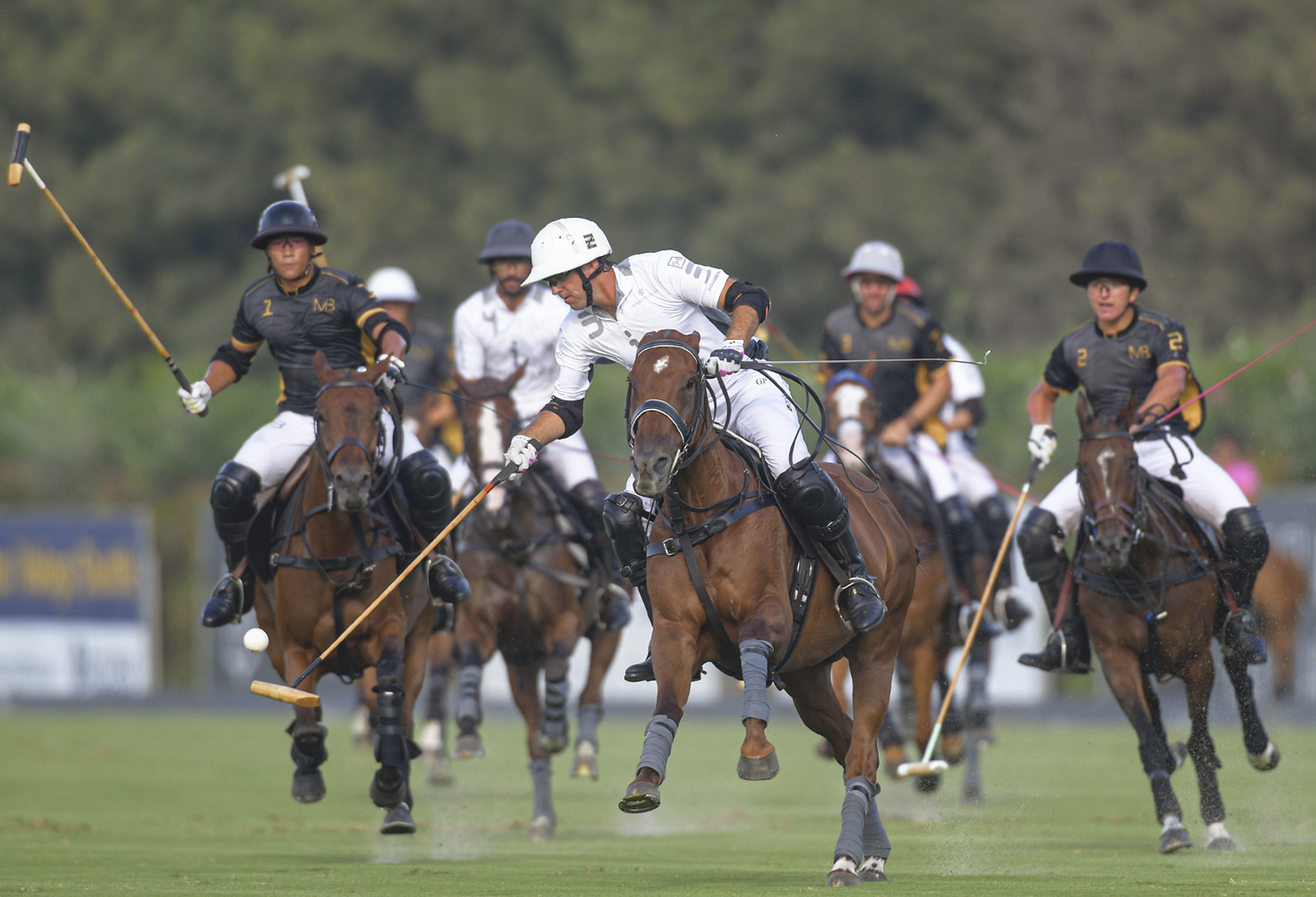
If you walk through Sotogrande in August, you notice it right away: horseboxes on the road, green fields full of spectators and a social calendar built around chukkas. Here, polo is part of life. But the bond is much older than the resort itself. The sport reached this corner of Spain through Gibraltar, as early as the nineteenth century, and Sotogrande has had its own fields since 1965. Today the municipality of San Roque has ten polo fields. In this article we cover it all: how it began, who made it great, where you can watch it and how to get on a polo pony yourself.
How Polo Came to the Campo de Gibraltar

Polo reached this area with the British officers stationed in Gibraltar. They had discovered the game in India and took it to their garrisons. The Gibraltar Garrison Polo Club was founded in 1881. According to the San Roque tourist office, the club played on a piece of ground in Campamento, the district between La Línea and San Roque, from the mid-nineteenth century until 1934. There was also a racecourse and a golf course there.
The Statue in Campamento

You may have seen the statue yourself. It stands on Avenida de las Mimosas, in Campamento. It is called El Polo and is the work of the sculptor Nacho Falgueras, the same artist behind, among others, the monument to the cross-border worker in La Línea. It shows a polo player on horseback. The inscription reads: “A Campamento, cuna del juego del polo en Europa. San Roque 2006”, that is, “To Campamento, cradle of the game of polo in Europe.” It is recorded by Diario Área.
It is a local claim to be proud of, but not the only one. Malta, England and Jerez de la Frontera are also named as polo’s first homes in Europe. According to the Andalusian Polo Federation, a polo club was formed in Malta as early as 1868, and polo was first played in England in 1869.
Jerez and Spain’s First Club
The official history gives Jerez as the place where polo was first played in Spain. Pedro Nolasco González, later the Marquis of Torresoto, learned the game in England from relatives in Kent. After returning home in 1870, he founded the Jerez Polo Club with some friends. The Royal Spanish Polo Federation gives 1872 as the year the club was founded.
According to the Andalusian Polo Federation, the Gibraltar officers often played against Spanish teams. On 21 July 1897, Spain’s first international match was played in Armilla, near Granada: the Larios brothers against the Gibraltar Garrison Polo Club. The earliest documented match between Jerez and Gibraltar dates from 5 January 1900.
The Zóbel Family and the Clubs That Put Sotogrande on the Map
The Campamento ground closed in 1934. The next big step for polo in this region came about thirty years later, in Sotogrande, from a Filipino family. Without the Zóbel family there would be no polo in Sotogrande
Without the Zóbel family there would be no polo in Sotogrande. The resort itself was founded by the Filipino couple Joseph McMicking and Mercedes Zóbel de Ayala. In 1965 Enrique Zóbel, Mercedes’s nephew, built the first polo ground: the legendary Playa field, between today’s Real Club de Golf Sotogrande and the beach, according to Andalucia.com and Turismo San Roque.
Tournaments were held there from 1967, at first a family affair with four teams. In 1971 came the first Sotogrande Gold Cup, won by Pedro Domecq de la Riva’s Casarejo Portales team. In 1984 winter storms destroyed the Playa field, according to Andalucía.org and Andalucia.com.
Santa María Polo Club

That first field became the Santa María Polo Club, for decades the best-known name in Spanish polo. After the loss of La Playa, the Río Sotogrande fields were built from 1984, followed by Puente de Hierro in 1992 and, between 2002 and 2008, the Los Pinos complex, near the marina, according to Andalucia.com and Wikipedia.
A lot has changed in recent years. According to Andalucia.com, Santa María now focuses on its equestrian centre and has leased Los Pinos to Ayala Polo Club since 2021. Río Sotogrande is no longer used for polo. In 2026, Polo Valley moved its activity to Puente de Hierro while its own complex was being renovated, as Al Sol de la Costa reports, and turned the grounds, which it calls Iron Bridge, into a permanent base during the season. As for the Mora-Figueroa family: they were among the club’s first regulars, according to The Objective, and in 2024 Merca2 described Santa María as owned by the family.
Ayala Polo Club

Ayala is the other branch of the same family story. Iñigo Zóbel, Enrique’s son, formally founded the club in San Enrique de Guadiaro. Since 2006 the complex has grown considerably: it now has three match fields, three exercise tracks, an indoor riding arena and stables for 400 horses. According to Andalucia.com, the club is now run by Paola Zóbel, Enrique’s granddaughter.
Iñigo Zóbel still plays: in the 2026 Gold Cup he took to the field with the Ayala team, according to Andalucia.com.
The Wider Polo Family
Other surnames keep appearing. The Domecq family, from Jerez, won the first Gold Cup and the calendar includes trophies played in the family’s memory. In the area there are also smaller clubs, such as Dos Lunas, in San Martín del Tesorillo, Iridike, at Finca Tres Rosas, and Polo Valley, according to Andalucia.com.
Watching Polo: When and Where
The polo season in Sotogrande runs roughly from April to September, with its peak in summer. Entry is free. In 2026 Ayala Polo Club organised the high season for the sixth year running, and the organisers confirmed that all matches were open to the public at no cost, according to Andalucia.com and Al Sol de la Costa.
The International Polo Tournament, in Summer

The highlight is the International Polo Tournament, held every year from late July to late August. It is made up of three cups played one after the other, at three levels: high handicap (20 to 22 goals), medium (12 to 14) and low (6 to 8). According to Andalucia.com and Al Sol de la Costa, this was the 55th edition in 2026:
| Cup | 2026 dates |
|---|---|
| Bronze Cup | 27 July – 1 August |
| Silver Cup | 3 – 15 August |
| Gold Cup | 17 – 29 August |
The 2027 dates have not yet been announced. It is worth keeping an eye on Ayala Polo Club’s channels; in 2026 the season was presented in mid-May.
The level speaks for itself. The 2026 Gold Cup featured players such as Adolfo Cambiaso, Facundo Pieres and Pablo Mac Donough. Dubai won the top division for the fifth time, beating Sainte Mesme 16-9, according to Andalucia.com.
Where to Watch
The big matches are played at Los Pinos, near Puerto Sotogrande, which has four match fields and a warm-up field. The atmosphere is there too: in 2026 there were shops, weekend markets and concerts. Matches are also played on Ayala’s three fields, in San Enrique de Guadiaro, according to Andalucia.com and Diario Siglo XXI.
Tip: Google Maps often still lists Los Pinos under its old name, Santa María Polo Club. To find out which match is on which field, check the day-by-day programme. For 2026 we kept the full match schedule.
Outside the High Season
There is also polo before and after the summer, often with lower handicaps and smaller crowds. In 2026 the season opened on 19 May with the Turismo San Roque Welcome Cup, followed in June by, among others, the Open de España and the Joseph McMicking Cup, according to Al Sol de la Costa and Andalucia.com.
Learning Polo: Where to Go
You don’t need to be an expert rider to start playing polo. Around Sotogrande there are several schools that put beginners on a calm, experienced pony and guide them step by step: first learning to ride the polo way, then practising the swing on a wooden horse and, finally, playing their first practice chukkas. These are the schools listed by the Andalusian Polo Federation or that offer beginner lessons themselves, according to Turismo San Roque and Sotogrande.com. The table also lists the other clubs and useful contacts in the area.


| Club or school | What they offer | Address | Contact |
|---|---|---|---|
| Ayala Polo Academy (Ayala Polo Club) | Private and semi-private lessons, instructional chukkas, beginner introduction and autumn league. The club organises the International Polo Tournament. | Hacienda de San Enrique, km 1, 11312 San Enrique (San Roque) | 956 610 144 [email protected] ayalapolo.com |
| Polo Valley | Riding and polo lessons, beginner week, children’s programmes, accommodation | Vereda de los Pescadores, 29690 El Secadero (in 2026 also Puente de Hierro) | +34 690 036 016 [email protected] polovalley.com |
| Iridike Polo Club | Polo academy (since 2025), polo holidays, private lessons, practice chukkas, horse-riding trips. Founded by the professionals Luciano Irazábal and Mariano Iturrioz | Finca Tres Rosas | 607 745 931 [email protected] iridikepolo.com |
| Herencia Polo Sotogrande | Polo school and polo holidays, since 2020 | Finca Pacheco, by the Guadiaro river, about 15 minutes from Sotogrande | +34 626 443 401 [email protected] polosotogrande.es |
| Santa María Polo Club | Historic club, now focused on its equestrian centre | Finca Los Pinos, exit 1091 of the A-7, 11310 Sotogrande | 956 610 012 [email protected] |
| Dos Lunas Polo Club | Polo and dressage; prepares horses for competition | Finca El Mezquitón, San Martín del Tesorillo | 956 618 052 [email protected] |
| Andalusian Polo Federation | Licences and information on federated schools | C/ Benidorm 5, 41001 Seville | 954 461 318 [email protected] |
Iridike, a family club. Iridike presents itself as a relaxed, friendly family polo club, and talks about its “polo farm” in the heart of Andalucía. Its academy, launched in 2025, is open to all ages and levels, from children discovering the sport to experienced players. According to its website, besides lessons it offers tailor-made polo holidays, with accommodation ranging from nearby hotels to private villas, guided horse-riding trips and low-handicap tournaments all year round, with a high season in July and August. It has stables for its own horses and for clients’ horses, and lends a helmet, boots, mallets and knee guards to anyone without equipment. Rates depend on the activity (lessons, polo holidays, practice chukkas, stabling), so the best thing is to tell them what you are looking for and ask for a quote directly, using the details in the table.
Cristian Chaves is a professional polo player who teaches all levels, from people who have never been on a horse to players looking to step up to tournaments. He gives lessons in Spanish and English and adapts each session to the person, their pace and what they want to achieve. His aim is simple: that you enjoy polo from day one and want to come back.
He prefers not to publish prices, since he tailors each lesson to the individual. The best thing is to get in touch with him directly and he will prepare a proposal: +44 7909 952247 (WhatsApp too).
Learn Directly from a Pro
Never been on a horse? Then it may be wise to take a few ordinary riding lessons first. The schools above offer them too, and the area also has riding centres, such as the Santa María Equestrian Club, near Puente de Hierro.
There is also plenty for children. Polo Valley runs an after-school polo programme with Sotogrande International School, and the school itself has a Sotogrande Polo Academy for its pupils.
Playing Yourself: What You Need and What It Costs
Polo is not a cheap sport, but you don’t need to buy horses at the start. Most beginners begin with individual lessons or a week-long course, with the pony, tack and equipment included. Only later, when you want to play matches in earnest, do your own horses, the licence and the handicap come into play.
What You Need
During lessons, the school usually provides the equipment. Polo Valley’s children’s programme, for example, includes the full kit: boots, helmet and mallet. As you progress, you will buy your own polo helmet, riding boots with knee guards, gloves, a whip and one or more mallets, plus white polo trousers.
To take part in club chukkas or in tournaments, you need a federation licence. Polo Valley expressly requires a licence and white clothing for its playing days. The Andalusian Polo Federation sells annual licences for adults and juniors, as well as a temporary 10-day licence for visitors. Prices are in its online shop.
What It Costs: An Example
Prices vary by school and by season. Polo Valley is one of the few schools that publishes its rates, so we use its prices for beginners, players and livery as an example, as they appeared on its website in October 2026:
| Item | Price (excl. VAT) | For |
|---|---|---|
| Riding or polo lesson, 1 hour | €300 | Beginners and players |
| Discovery Week (8–15 May 2027) | €7,500 | Beginners, including those with no riding experience |
| Club chukkas (4 chukkas), June–August | €1,000 | Experienced players |
| Club chukkas (4 chukkas), March–May and September–October | €800 | Experienced players |
| Livery for your own horse, high season | €1,000 per horse per month | Players with their own horses |
For Herencia Polo Sotogrande, a local guide from CVP Properties mentions a taster lesson from €220, including pony, helmet and mallet. We have not been able to confirm this on the school’s own website, so check the current price. Rates at Ayala and Iridike depend on what you are looking for: a single lesson, a polo holiday week, practice chukkas or stabling for your horse. The best thing is to tell them what you have in mind and ask for a quote directly.
Where to Play
Once you have the basics, you will first play practice chukkas at your own school. Polo Valley offers club chukkas and the Ayala Polo Academy offers instructional chukkas. Ayala also runs its own autumn competition: the Autumn League ran until 2 November in 2025, according to IAGTO. For low handicaps (up to 8 goals) there are tournaments at Los Pinos before and after the high season, such as the Welcome Cup and the Open de España, according to Andalucia.com.
Finally
From a small ground in Campamento for British officers to the Los Pinos fields where Cambiaso and Pieres play: polo has been part of this coast’s DNA for well over a hundred years. The best part is that, as a resident or a visitor, you can simply join in. Watching polo was completely free in 2026 and, if you catch the bug, there is a polo school a fifteen-minute drive from Sotogrande. Who knows, perhaps we’ll see you next summer by the boards, or on the field.


