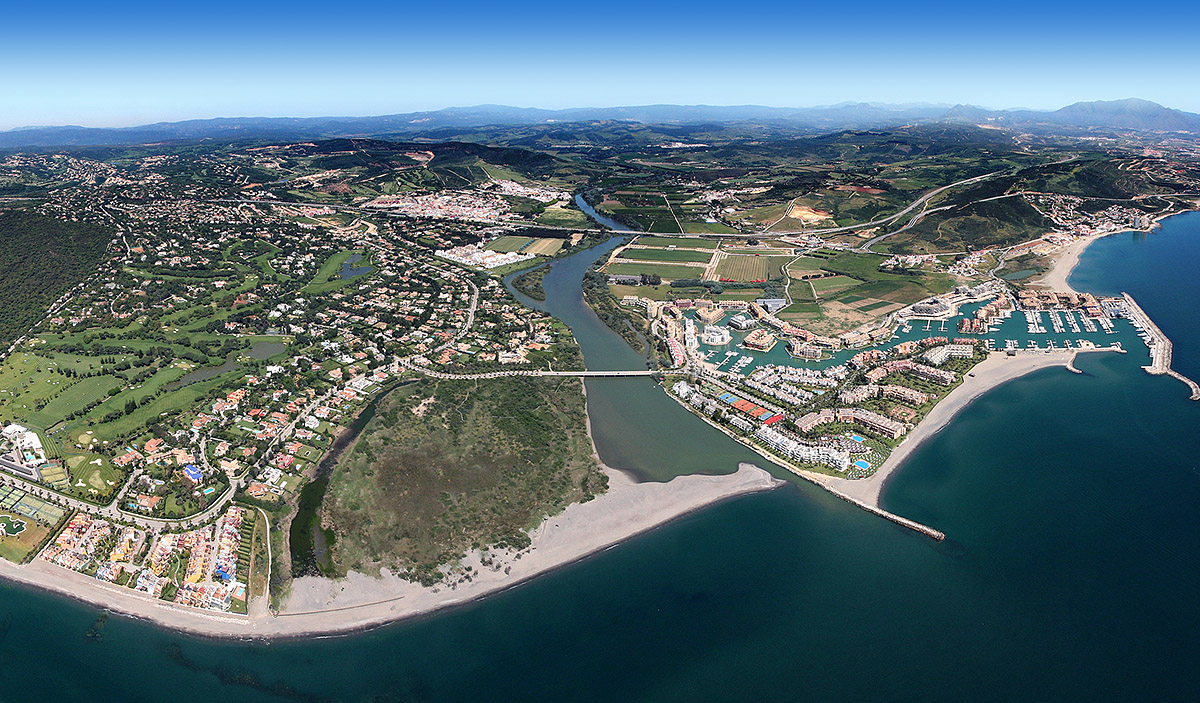
Sotogrande Neighbourhoods: The Stories Behind the Names of Its Developments

Sotogrande neighbourhoods come with a vocabulary of their own, and anyone starting to look for a home here runs into it straight away. Valgrande, Ribera del Marlin, Los Cortijos, The Seven, Isla Tortuga, Kings & Queens. To a newcomer it can sound like a random mix of Spanish, English and sea creatures. But behind many of these names there is a story: an old farmhouse, a polo field that no longer exists, a valley or, quite simply, the number of plots. In this article we walk through the main Sotogrande neighbourhoods and tell you where the developments are, what kind of homes you will find in them and, where it is known, where their name comes from. If Open Frontiers has homes for sale in an area, you will find the link to our listings on the name of the area.
First: Where Does the Name Sotogrande Come From?
The land on which Sotogrande stands used to be farmland on the banks of the Guadiaro. One of the farms was the Cortijo Paniagua, a large plain where rice was once grown. According to Andalucia.com, the name changed from Paniagua to Soto Grande when it was resold in 1959, still in two words at the time, as old maps show. On 19 September 1962, Financiera Sotogrande del Guadiaro, S.A. was incorporated, the company through which the Filipino couple Joseph McMicking and Mercedes Zóbel de Ayala developed the resort.
A soto is a place on riverbanks or floodplains covered with trees and shrubs. Sotogrande therefore comes to mean “the great riverside wood”, and anyone strolling by the mouth of the Guadiaro still understands why.
One more historical fact explains today’s division. In February 1969 a new stretch of the coast road opened, with the Puente de San Enrique. It shortened the journey but split Sotogrande in two: Sotogrande Alto, on the mountain side, and the part on the sea side, now called Sotogrande Costa, according to Andalucia.com.
Sotogrande Costa: Kings, Letters and Polo
Sotogrande Costa is the oldest part of Sotogrande, between the motorway and the beach, around the Real Club de Golf Sotogrande. Detached villas predominate here, along with some apartment complexes and townhouses.
Kings & Queens and the Lettered Zones

Kings & Queens, or Reyes y Reinas, is not a gated development but an area of villas. The name is meant literally: the streets are named after kings and queens. Many other parts of Sotogrande, on the coast and in Sotogrande Alto, are identified by a letter: on most streets in Zone F, for example, the name begins with F, and in Zone G, with G. It is handy for finding your way around: the name of a street usually tells you which zone you are in.
Sotogrande Playa: Where the First Polo Field Stood

On the Paseo del Mar, on the side facing the beach, are the original beach apartments, the buildings numbered 1 to 10. They are surrounded by lawned gardens that run right down to the sand, and in buildings 8 and 10 every apartment has a private pool.
This stretch of coast has a lovely history. In 1965, Enrique Zóbel had the first polo field in Sotogrande built here. It was called La Playa and lay beside the beach and the mouth of the Guadiaro, where Sotogrande Playa stands today. In 1984, winter storms destroyed the field. You can read more about that story in our article on polo in Sotogrande.
A little further on, on the Paseo del Río, are the Casas del Río blocks, with river views.
El Polo and Polo Gardens
How deeply rooted the sport is shows in the names too. El Polo takes its name from the polo fields that used to lie right next to the apartments. It is a gated development of apartments and penthouses in the Kings & Queens area of Sotogrande Costa, with three communal pools, security and a gym. Polo Gardens is very close by.
Paniagua: The Old Farmhouse Is Still Here

The old Cortijo Paniagua has never quite disappeared. On that flat land, where rice was once grown, the shopping centre and the school were later built, the latter staying there until 2001. In 1974 a second polo field, also called Paniagua, was opened, according to Andalucia.com. The name lives on in the Avenida del Paniagua, in the Galerías Paniagua, home to Plaza Blanca, the commercial hub of Sotogrande Costa, and in newer developments such as Villas de Paniagua, modern townhouses.
Puerto Sotogrande: An Aquarium of Names

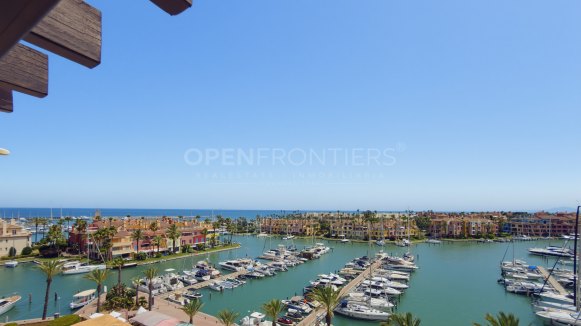
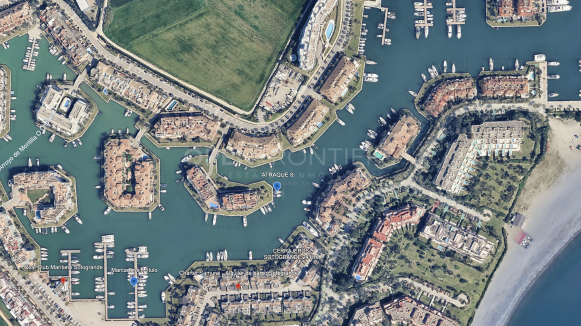
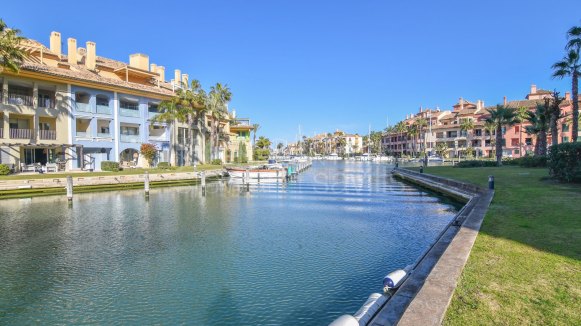
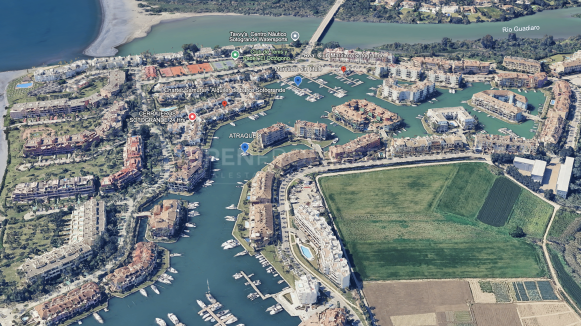
Puerto Sotogrande is the youngest of Sotogrande’s “old” areas. In 1982, the Council of Ministers authorised Puerto Sotogrande, S.A. to build and operate a yacht harbour and an inner marina, as the BOE records, and in 1987 the port opened under the official name Puerto Deportivo Sotogrande. To give an idea of the project: of roughly one kilometre of coastline, 600 metres went to apartments and 400 metres to the port itself. Once finished, the complex totals 1,382 berths and 1,426 homes.
Riberas and Islas
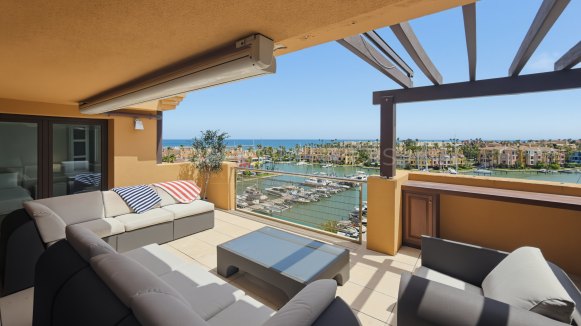
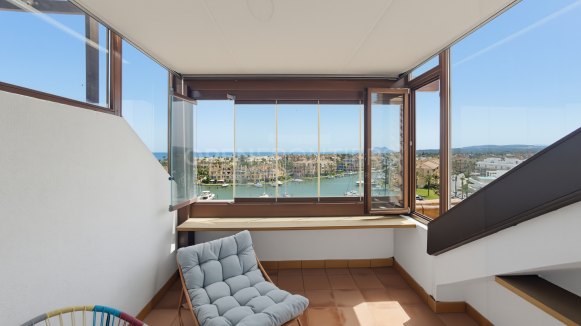
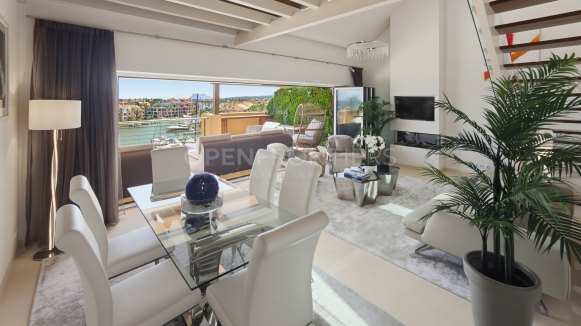
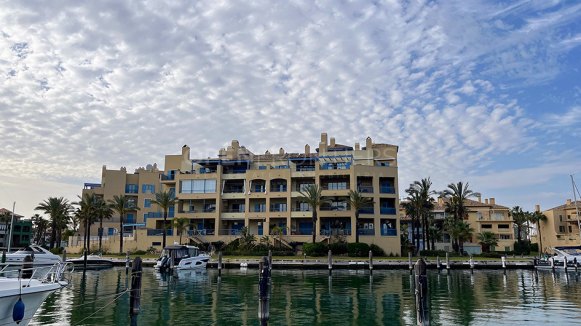
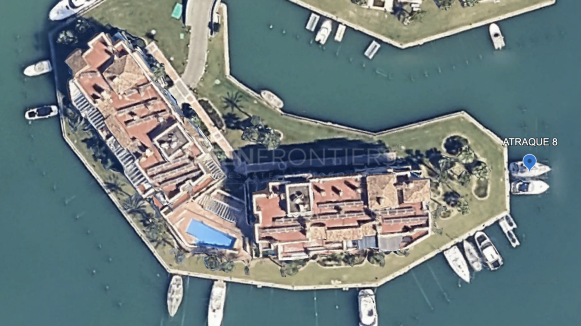
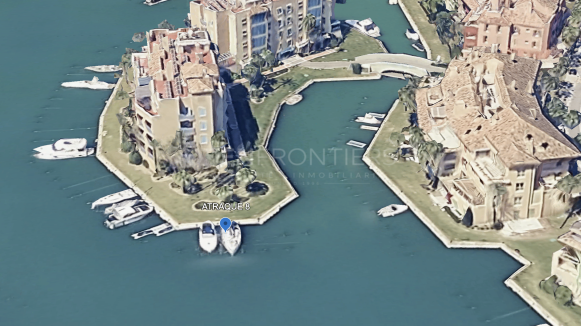
From the mid-1990s, the port was extended inland with an inner marina. That is where the layout you still see today came from: the apartment blocks along the quays are called Riberas, and the blocks built on small islands joined by arched bridges are called Islas. On several of the Islas, the private mooring is literally beneath the terrace. Ribera del Emperador and Ribera del Delfín were built in 1997, followed by Isla del Pez Volador.
Fish, Turtles and a Parrot

Put the names side by side and the theme jumps out: almost everything that swims or crawls in the sea. It is no coincidence: the names in the port follow a single line. A few examples:
- Ribera del Marlin: the block closest to the marina entrance, with shops and restaurants on the quayside and, on Sundays, the Mercado de Levante.
- Ribera del Emperador: the emperor, or swordfish.
- Ribera del Delfín: the dolphin.
- Isla del Pez Volador: the flying fish.
- Ribera del Pez Luna: the sunfish.
- Isla Tortuga and Isla Carey: the turtle and the hawksbill turtle.
- Ribera de la Nécora: the velvet crab, so prized at our seafood lunches.
- Isla del Pez Barbero, Ribera del Gurami and Ribera del Arlequín: names you would expect to find in an aquarium before the Mediterranean.
The odd one out is Jungla del Loro, a development on its own island within the marina. Other names in the port include Ribera del Obispo, Ribera del Paraíso, Ribera del Río, Isla de la Vela, Ribera de la Golondrina and Guadalmarina.
The New Generation
The most recent projects in the marina more often opt for English names. The Pier, with Pier 1 and Pier 2, is a development by Taylor Wimpey España. It stands next to the yacht club and has a communal pool and underground parking.
Sotogrande Alto: Valleys, Estates and Golf
North of the motorway lies Sotogrande Alto, one of the main Sotogrande neighbourhoods, the area around, Valderrama and The Alto Club, formerly Almenara. People who live here do so for the peace, the greenery and the views over the golf courses to the sea.
Valderrama: An Estate With a Golfing Name

Many developments in this area carry the name Valderrama: La Hacienda de Valderrama, Los Altos de Valderrama and Los Patios de Valderrama. The name comes from the Finca Valderrama, one of the five original estates that made up Sotogrande. The golf course itself was originally called something else: in 1974 Sotogrande Nuevo was built, designed by Robert Trent Jones, and in 1981 it was renamed Las Aves. In 1984 Jaime Ortiz-Patiño bought it, remodelled it and reopened it as Valderrama, the name that went round the world with the 1997 Ryder Cup, according to Andalucia.com.
La Hacienda de Valderrama, on the Avenida de los Cortijos, is a gated development of six large blocks around a pool, with underground parking. Los Altos de Valderrama is an area of plots and modern villas.
Valgrande: The Great Valley
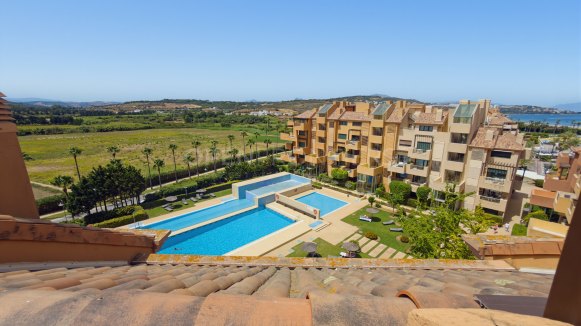
Opposite the entrance to Valderrama is Valgrande, one of the largest gated developments in Sotogrande. It was built in 2005 and consists of 38 three-storey blocks in three groups, around wooded gardens and a pool, with 24-hour security, according to Andalucia.com. It has a spa with a heated indoor pool, a gym, tennis and a putting green. The name is literal: the development sits in a great valley.
El Mirador del Golf: A Name With a Wink
Our favourite name. El Mirador del Golf, on the Avenida de los Cortijos, almost opposite the entrance to Valderrama, promises golf views. However, according to Andalucia.com, despite the name the development does not overlook the golf course: it looks onto the woods and the Guadalquitón stream. It consists of four buildings with communal gardens and a pool, about twenty homes, and was built by Dragados.
Casa Cortijo and Sotogolf
Next to the entrance to Valderrama is Casa Cortijo, with quiet low-rise homes, some with views over the course. The development was extended in the 1990s. Sotogolf, reached from the Avenida del Carmen, is a gated development from 2003 with 68 semi-detached three-storey homes.
Almenara: From Watchtower to Golf Club

Almenara is the name of the golf and hotel area of Sotogrande Alto. The Dave Thomas golf course opened in 1998 and is now called The Alto Club. The hotel opened in 1999 under the name Almenara, taken from the mountains to its north, on the site of the old Cortijo Santa María de la Higuera, and reopened in August 2021 as SO/ Sotogrande, according to Andalucia.com. The word itself is lovely: almenara comes from Arabic and means “place of light”, the fire lit on towers to send signals.
Next to the course is Los Cármenes de Almenara, a small gated development of twenty townhouses with four communal pools, each shared by five homes.
La Reserva: Counting and Contemplating

La Reserva is the most recent of Sotogrande’s large areas. The Cabell B. Robinson golf course opened in 2003, and in 2018 The Beach was added, the lagoon with a sandy beach at the heart of La Reserva Club.
Los Cortijos de La Reserva
Los Cortijos de La Reserva is the original development in La Reserva, built in 2006: eighty detached and semi-detached villas of 150 to 350 m², most with their own pool. The name fits the farming past of the area.
The Seven and The Fifteen

Here the name is, quite simply, the number. The Seven is made up of seven plots of about one hectare each, arranged in a ring around the top of a hill. Each plot is designed for a villa by a different international architect, with gardens by the landscape designer Jean Mus. The Fifteen follows the same idea with fifteen plots of between 4,500 and 5,000 m², with concept designs by ARK and Vicens & Ramos.
El Mirador
Not to be confused with El Mirador del Golf: this El Mirador is at the very top of La Reserva Club and consists of six villas designed by ARK Architects. Here the name does justice to the views.
Village Verde, Senda Chica and Los Álamos
Village Verde is a recent project by Sotogrande S.A. itself: a little over 120 apartments and penthouses in ten blocks, built in three phases between 2023 and 2025, in a six-hectare park. Senda Chica has 102 modern apartments in fourteen blocks, built in 2021. And Las Villas de Los Álamos, by Acciona, comprises 49 homes with views over the La Cañada golf course. We currently have a semi-detached villa and a semi-detached house with a garden for sale there.
Sotogrande Neighbourhoods at a Glance: What Does Each Name Mean?
| Name | Where | Meaning or origin |
|---|---|---|
| Sotogrande | All of Sotogrande | Great riverside wood; in 1959 the Paniagua estate was renamed Soto Grande |
| Kings & Queens | Costa | Streets named after kings and queens |
| Sotogrande Playa | Costa | The beach; the first polo field, La Playa (1965), stood here |
| El Polo | Costa | The polo fields that lay next to the apartments |
| Paniagua | Costa | The old Cortijo Paniagua |
| Ribera / Isla | Marina | Quay / small island |
| Ribera del Emperador | Marina | Swordfish |
| Isla Carey | Marina | Hawksbill turtle |
| Jungla del Loro | Marina | A parrot among all those fish |
| Valderrama | Alto | One of the five original estates |
| Valgrande | Alto | Great valley |
| El Mirador del Golf | Alto | Golf views (although it looks onto the woods) |
| Almenara | Alto | From the Arabic “place of light”: signal fire or watchtower |
| Los Cortijos | La Reserva | The farming past of the area |
| The Seven / The Fifteen | La Reserva | The number of plots |
Finally: Choosing Between Sotogrande’s Neighbourhoods
Taken together, the names of Sotogrande’s developments tell a piece of history: from rice fields and farmhouses, through the first polo field by the sea and a golf course that was once called “Las Aves”, to a marina full of fish and a hill with seven plots. Each development also has its own character, atmosphere and price level. Whether you are looking for an apartment with a berth, a townhouse overlooking Valderrama or a villa near the beach, we know these developments like the back of our hand and would be delighted to help you find the place that suits you best. Write to us or call whenever you like. You can also browse our properties for sale and our new developments.
Keep Reading
- Polo in Sotogrande: Its History, and Where to Watch It, Learn It and Play It
- Construction Costs Are Rising. Sotogrande Isn’t Slowing Down.
- Sotogrande Property Market Q3 2026: Spain Is Slowing. Sotogrande Isn’t.
About the Author
Innin Buyl is Director of Sales at Open Frontiers, the Sotogrande agency founded by her father, Ben Buyl, in 1996. She grew up in Sotogrande, a story she tells in Thirty Years of Open Frontiers.
This article is for information only and draws on public sources. It is not legal, tax or financial advice.