Sotogrande Property Market Q3 2026: Spain Is Slowing. Sotogrande Is Not.

- Spain’s housing market is cooling from a record year. Sales are down 3% so far in 2026, credit is tightening, and the European Central Bank (ECB) has started raising interest rates again.
- Sotogrande is running on a different clock. Most of our buyers fund their purchases with international wealth rather than Spanish mortgages, so the national slowdown has not reached them.
- Liquidity is healthy. In our own transactions, both enquiries and offers are up on last year, and sellers are giving less room to negotiate.
- The four zones are moving at different speeds, and the averages hide most of the story. Read together, the evidence places Sotogrande in a mid-to-late expansion, decoupled from the rest of Spain.
The number everyone quotes is the one that matters least

In July, Spanish notaries signed 11.1% fewer home sales than a year earlier, yet the average price per square metre still rose 7.7%. That gap is what a late-cycle market looks like. When conditions tighten, buyers are the first to step back, so fewer homes change hands. Sellers rarely cut straight away; most hold their price for months, until unsold homes start to pile up. Volumes turn first, and prices follow much later.
At first glance, Sotogrande looks immune. Asking prices rose 11.1% in a year, to a record €4,082/m², according to idealista. That number is real, but it only tells you what sellers are asking, not what buyers are paying. It also says nothing about how many homes actually sell, and in a market as small as ours, that is the question that matters.
To understand where Sotogrande stands, you have to start much wider. This report begins with the big picture: European interest rates, the Spanish economy and the national property market. It then zooms in step by step, first to Sotogrande as a whole, then to its four zones, and finally to our own transactions, which show what official data cannot yet see. Along the way, it explains how to read a property cycle, so that every conclusion can be checked against the evidence.
How to read the property market cycle
Most people judge a property market by its prices. The problem is that prices are a lagging indicator: by the time they move, the cycle has usually already turned. Professionals look at the data in three groups, sorted by timing.
Leading indicators move first. These include bond yields, credit conditions, mortgage approvals and business surveys, and, closer to home, enquiries and transactions. Coincident indicators, such as GDP, employment and retail sales, move with the economy. Lagging indicators, including unemployment, bankruptcies and property prices, only confirm what has already happened.
Credit first, prices last
A housing cycle tends to break in the same order, and it almost always starts with credit. When banks tighten lending, buyers find money harder to get. Fewer people can buy, so demand falls, and with less demand, fewer homes sell.
Sellers then wait longer for offers, and buyers begin to negotiate harder. Unsold homes build up on the market. Only at the end of that chain do prices adjust downward, to meet the buyers who remain.
So if you only watch prices, you are always the last to know. By the time they drop, the slowdown has usually been running for months. Watching how easily people can borrow, and how many homes actually sell, shows you the turn while it is still happening.
Six stages, and how to spot each one
| Stage | What you typically see |
|---|---|
| Early recovery | Rates falling, credit improving, sales rising, prices still weak |
| Expansion | Jobs strong, credit growing, sales and prices rising together |
| Late cycle | Prices high, affordability stretched, rates rising, stock starting to build |
| Slowdown | Sales falling, longer negotiations, wider discounts |
| Contraction | Jobs weakening, credit tight, forced sellers, prices falling |
| Bottoming | Bad headlines continue, but sales stop falling and credit stabilises |
Why Sotogrande needs a different lens
In most markets, time on market is one of the clearest warning lights. A home that sits unsold for months suggests weak demand and a seller who is ready to cut. In Sotogrande, that logic does not hold, and treating time on market as a sign that the owner will negotiate is one of the most common mistakes buyers make here.
The reason is structural. Sotogrande has a limited number of homes and a small, specific pool of buyers. Life here is quiet and very particular, and it is not for everyone, so there are no city-style queues of buyers waiting for stock. A good home can take months to find the right buyer without anything being wrong with it, or with its price.
That is why we read this market through different signals. We look at whether buyers are moving from viewings to offers, or only watching. We track how much of the market trades privately before it ever reaches a portal. We watch the gap between signing a private purchase contract and completing at the notary, which can run from one to six months, or more, and is itself part of the negotiation. And we ask who owns a property and how it is financed, because that tells you what each month of waiting costs the seller. Each of these comes up again later in this report.
The Spanish economy in 2026: rates, credit and inflation
Rates and credit: the cutting cycle is over
The ECB raised its deposit rate in June and again in September, to 2.50%. These were its first increases since 2023. The cause is an energy shock rather than an overheating economy. The conflict involving Iran has pushed oil back above $100 a barrel, and the ECB now expects inflation to stay “well above target for an extended period.”
Borrowers have felt it quickly. Euribor 12M, the rate most Spanish variable mortgages track, averaged 3.247% in September, against about 2.17% a year earlier. Spain’s 10-year government bond yield crossed 4% in mid-September for the first time since October 2023. Rates are now rising into a housing market that was already slowing, which is a classic late-cycle combination.
Banks have responded by lending more cautiously. Spanish lenders tightened their standards for home loans in the second quarter, and demand for those loans fell sharply. By July, new home mortgages were down 3.5% nationally and 9.3% in Andalucía, even as the average loan reached a record, because the buyers who do borrow need more to pay today’s prices.
This is not 2008, though. Household debt stands at about 42.5% of GDP, the lowest level since 1999, doubtful loans are around 2.5%, their lowest since 2008, and most new mortgages are fixed-rate. Tighter credit slows buying, but it does not force people to sell. That distinction matters later in this report.
Growth, jobs and inflation
The wider economy is still in good shape. Spain grew 2.7% in the year to the second quarter, more than double the eurozone pace, and unemployment sits just under 10%. September brought a record number of new Social Security registrations for that month, partly reflecting the regularisation of foreign workers that began in April. A genuinely dangerous economy needs three things at once: high rates, weak hiring and rising unemployment. Spain currently shows only the first.
Inflation is the real constraint. Spanish consumer prices rose 4.9% in September’s flash estimate, with core inflation at 3.1%. Producer prices, which are the prices factories and energy companies charge before goods reach the shops, rose 13.2% in August, mostly because of energy. Those costs usually filter through to consumer prices and construction budgets a few months later, which keeps pressure on both inflation and the ECB.
This is the difficult combination for a central bank. When inflation falls while growth weakens, it can cut interest rates to support the economy. When inflation rises while growth weakens, it has to keep rates high for longer. That is where the ECB finds itself, and markets see a real chance of another interest-rate rise at its meeting on 29 October.
Households are feeling the squeeze before the official statistics fully show it. Retail sales fell 1.1% in August, the sharpest drop in over two years, and the household savings rate slipped to 11.0% in the second quarter, from 12.0% a year earlier. Families are drawing on savings to absorb higher prices. The stress is building quietly, but it has not yet reached the labour market.
Where that leaves Spain
Put together, Spain sits in a late-cycle phase and is edging into a slowdown. There is no recession signal in jobs or in the quality of bank lending. But the sequence described above, starting with credit, has begun.
Spain’s property market in 2026: sales have turned, prices have not
Cooling from a record, not collapsing
Every official source now shows sales falling. Notaries recorded an 11.1% fall in July. Spain’s national statistics office (INE) shows July sales down 5.1%, and 5.5% in Andalucía, and the Property Registrars recorded a second consecutive quarterly fall in the spring.
The size of the fall needs context. 2025 was the busiest year for Spanish home sales since 2007, with INE counting 714,237 transactions, up 11.5% on the year before. So far in 2026, INE figures show sales 3.0% below the same months of 2025, while the registrars still recorded 1% more sales over the twelve months to June. Neither move is dramatic. Volumes are roughly flat, and still close to their highest level in almost two decades.
The notaries, who count slightly differently, recorded 752,661 home sales nationally in 2025. According to their public portal, just 205 of them were in Sotogrande: under 0.03% of the national total, or roughly one sale in every 3,700. In the twelve months to May 2026, the figure was 196. Those numbers alone show how small and specific this market is.
What matters is the direction rather than the size. After two years of strong growth, the trend has turned negative, and individual months, like July’s 11.1% fall at the notaries, swing much harder than the overall picture.
Is this a shortage of homes or a shortage of buyers? Stock is certainly tight: homes for sale fell 7% in the year to June, according to idealista, and the Banco de España estimates a national shortfall of around 750,000 homes. But a shortage limits sales every year, and it does not explain why sales turned in 2026. The change has come on the demand side. An average home now costs 6.8 years of gross income, mortgage demand is falling, and banks are lending more carefully. idealista reads the market the same way: higher prices are pushing out buyers who can no longer afford them.
Prices, supply and what the data misses
Prices, meanwhile, are still setting records. The official house price index rose 12.2% in the second quarter, and the registrars’ average reached a record €2,487/m². New-build prices are still rising too, by 7.4% in a year, at a steadier pace than resale homes, which rose 12.9%.
Supply is responding, but at a cost. Building permits for new homes rose 21% in the first half of 2026, housing starts reached an 18-year high in the first quarter, and urban land prices hit a 15-year high. As our earlier analysis of building costs showed, construction costs keep new-build prices firm. Developers facing weaker demand tend to pause projects rather than cut prices, which sows the seeds of the next shortage.
Foreign buyers have never mattered more to the national market. They accounted for a record 15.98% of Spanish home sales in the second quarter, led by the British, followed by the Dutch and the Germans.
Official figures also have a blind spot: they describe the market that was, not the one being built now. New-build and off-plan homes are only notarised on completion, so a villa reserved in La Reserva today may not appear in any statistic for a year. Sotogrande has further blind spots, including share deals and the price caps used in the registry method, which we explained in our Q2 report, Why the Official Data Is Wrong, and in our analysis of why Sotogrande is down on paper but up in reality.
Nationally, then, this is a textbook late-cycle pattern. The first step, falling volumes, is complete. The next steps are exactly where national data goes quiet and local knowledge has to take over.
Buying property in Sotogrande: why this market runs on a different clock
The buyer’s interest rate is not Euribor
Across Spain, 56.1% of home purchases in July used a mortgage, and the average loan covered 71.6% of the price. That is a market wired directly to Euribor: when rates rise, a large share of buyers either borrow less or drop out.
Sotogrande is wired differently. Through Q3, between half and three quarters of our sales used no mortgage at all. And the buyers who did borrow did not need to. Every one of them could have paid cash; they took a mortgage because low rates made financial sense at the time. (We explain how that works in our guide to getting a mortgage in Sotogrande as a non-resident.) Interest rates therefore shape how our buyers structure a deal, but they do not decide whether the deal happens.
A simple example shows how far apart the two markets can be. Take a €3 million villa. A London buyer paying cash would have needed about £2.61 million a year ago; today the same villa costs about £2.55 million, so sterling alone has saved that buyer roughly £62,000. Now take a Madrid buyer financing €1 million on a variable-rate loan. With Euribor about 1.08 points higher than a year ago, that buyer faces roughly €10,800 more in first-year interest. Same market, same year, two entirely different experiences.
The right word for Sotogrande is not “immune”. It is insulated.
What actually moves a Sotogrande buyer
A wealthy British buyer is not reacting to Spanish GDP. Their decisions follow sterling, the tax rules at home, their equity portfolio and their family’s plans, and the same is true of our Dutch, Belgian, German and Scandinavian buyers. Several of those forces are moving in Sotogrande’s favour.
A pound now buys about 2.4% more euros than it did a year ago, on ECB reference rates. Global household wealth rose 10.8% in 2025 in US dollar terms, according to UBS, and nearly a million new millionaires were created. In the UK, unused pension funds will fall inside inheritance tax from April 2027, relief on farms and businesses was capped in April 2026, and the next Budget lands on 28 October. The Netherlands plans to tax actual investment returns from 2028. Each of these pushes internationally mobile families to think again about where they hold their wealth and where they want to live. On the Spanish side, the Golden Visa ended in April 2025, and the proposed 100% tax on non-EU buyers has stalled in Congress.
The most striking change we have seen is in how buyers compare Sotogrande with Marbella. For years, Sotogrande was seen as the quiet alternative. Today, our buyers look at the two as equals, and many of them choose Sotogrande. The data explains part of the shift. Marbella’s asking prices rose 3.2% in a year, to €5,967/m² (idealista), while Sotogrande’s rose 11.1%, to €4,082/m². Even so, Sotogrande still sits about a third below Marbella per square metre. But this is not a cheaper Marbella. It is a different proposition, built on lower density, more privacy and a slower pace of life, and buyers who compare the two choose the one that suits how they want to live.
Gibraltar is the other structural change of the year. The EU–UK treaty removed physical border controls on 15 July, although formal ratification is still under way: the UK process could finish in late October, with a European Parliament vote expected in December. Sotogrande is a short drive from the border, yet we have seen no visible change in demand since July. That is normal. Changes of this kind take years, not weeks, to show up in buyer behaviour, as we explored in what the new Gibraltar border means for Sotogrande property.
Sotogrande property sales in 2026: what our own transactions show
Because official statistics arrive late and miss much of this market, we also read our own deal flow. The sample is small, so we present it as a practitioner’s view rather than a market statistic. All figures cover January to September 2026, with the fourth quarter still to come.
Who is buying, and how
The single most important signal in this report is that both enquiries and offers are up on 2025. In a late-cycle market, enquiries tend to hold up while offers fade, as buyers keep looking but hesitate to commit. That is not what we are seeing. Buyers are not just watching; they are committing.
Our buyers remain overwhelmingly international: 82% of them, through Q3, were foreign. Spanish buyers are still active, but in smaller numbers. A meaningful part of the market also trades between people who already know each other. Families, friends and neighbours often buy and sell directly, so some transactions never appear on a portal at all.
Off-market activity is significant in its own right. 18% of our 2026 sales were agreed privately, including one bank-led sale and one private resale. Reform opportunities priced below market value move fastest of all, and the best of them often never reach the open market.
A further 29% of our 2026 deals are signed but not yet completed. Their deeds are due over the coming months, and none of them appears in any official statistic yet. That timing matters more than it seems. We agree prices at contract, on the market as it stands that day, but the deed at the notary often follows months later. Long closing periods are common here, so by the time these sales reach the statistics, they reflect prices that were agreed well before.
Resales and the long view
Resales drive this market. 88% of our 2026 deals were resales, with new-build and off-plan making up the rest, and two groups of them tell the long-term story of Sotogrande.
In the Marina, several apartments sold this year came from owners who bought them new in 2006, at the height of the last boom. They sold above their original purchase price. In Alto, a few communities were completed just as the crisis took hold; Hacienda Valderrama, finished around 2009–2010, is one example, and homes there have only recently fully recovered their original prices.
To understand why that matters, remember how deep Spain’s crash was. National prices fell about 37% from peak to bottom, with the worst years between 2011 and 2013, according to INE. Sotogrande was not spared, but in our experience it fell less hard and it came back. Homes bought at the peak have all recovered, and they now sell above even the highest asking prices from before the crash. The contrast with the surrounding area is clear: asking prices in San Roque outside Sotogrande still sit about 15% below their 2010 peak, while Sotogrande is at record highs.
Negotiation and timing
There is always some negotiation in Sotogrande, and margins typically run from zero to 10%. But sellers are accepting offers less and less, and last year we closed a deal above the asking price, which was unheard of before.
Part of the reason is that pricing has become far more accurate. Since October 2025, the notaries’ public portal has published real sale prices, down to postcode level. Homes are now priced against what buyers actually paid, rather than against rival asking prices, which leaves less room for the large gaps that used to invite heavy negotiation.
The calendar also shapes how the market looks from outside. July slows down, and in August, while holiday viewings peak, lawyers, notaries and banks run on skeleton staff. September restarts the machine: our September brought signed contracts rather than deeds, and those contracts complete in the fourth quarter. A quiet late summer in the statistics is therefore not a sign of weakness. It is paperwork waiting for the autumn.
Sotogrande property prices by zone: Costa, Marina, Alto and La Reserva
Sotogrande is not one market. Each zone has its own buyers, its own stock and its own momentum, and the overall average hides most of what matters.
| Area | €/m² | Monthly | Quarterly | Annual |
|---|---|---|---|---|
| Sotogrande (overall) | 4,082 | +2.5% | +6.9% | +11.1% |
| Puerto de Sotogrande–La Marina | 4,375 | +1.6% | +3.6% | +21.8% |
| Sotogrande Costa | 4,351 | +0.2% | +3.3% | +21.4% |
| Torreguadiaro–San Diego | 4,309 | +5.1% | +10.8% | +11.9% |
| Sotogrande Alto (includes La Reserva) | 4,077 | +4.5% | +9.9% | +7.3% |
| San Enrique–Guadiaro–Pueblo Nuevo | 2,534 | −6.2% | +0.1% | +12.8% |
| San Roque | 1,529 | +0.1% | −1.9% | +10.2% |
| Cádiz province | 2,539 | +0.6% | +2.1% | +9.9% |
| Marbella | 5,967 | +0.2% | +1.0% | +3.2% |
| Estepona | 5,021 | +1.2% | +4.0% | +17.1% |
| Benahavís | 5,602 | +0.9% | +3.2% | +6.5% |
These are idealista asking prices, not sale prices, so they show direction and momentum rather than what buyers actually paid. For a closer look at the same data, see our analysis of how Sotogrande’s market is outrunning its own headline number.
Sotogrande Costa: the rebuild economy

Zones A and B, together with Kings & Queens, are the classic heart of Sotogrande, with mature gardens, generous plots and established streets. The story here is renewal: older villas are being demolished and replaced with contemporary homes. Turnkey homes priced at market value sell fastest, and asking prices rose more than 21% in a year.
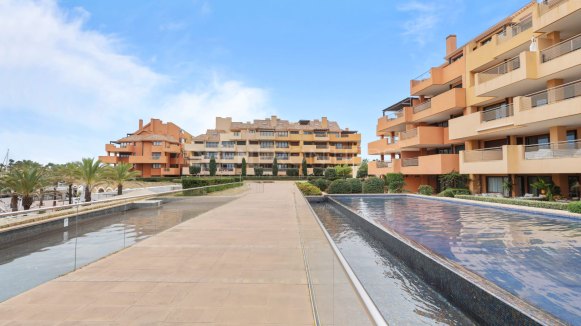
The Marina: walkable and rentable

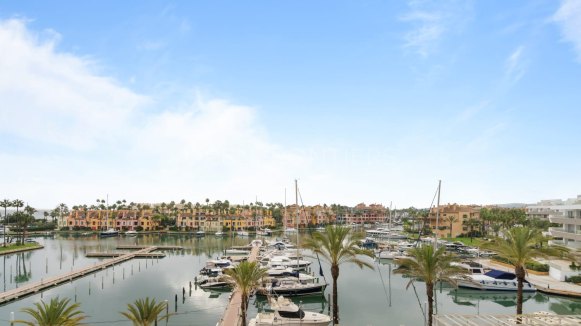
The Marina offers something the rest of Sotogrande cannot: walkable living, private berths and rental potential. On idealista, Marina asking prices dipped 1.5% in August after a July peak, then set a new record of €4,375/m² in September.
Movements like that need careful reading. Monthly figures tell you little in Sotogrande, because this is a very thin market with few homes for sale at any time. Two or three listings can shift an average, and if they happen to be smaller, older or have weaker views, the figure dips without anything having changed in the market itself. The trend over a year is far more reliable than any single month.
Through Q3, the Marina was our busiest zone, accounting for 47% of our transactions, almost all of them resales. Demand here also follows the seasons. In summer, buyers want to be close to the beach and the port, and many summer residents are here and looking to buy. In the rest of the year, the pattern shifts, as families buy homes and villas deeper into Sotogrande.
Sotogrande Alto: the ridge is catching up

In August, Alto’s asking prices were only 4% higher than a year earlier. By September, they had risen 9.9% in three months. Two forces explain the jump.
The first is value. Prices on the Costa have risen so much that more buyers are now considering Alto. The second is composition: portals such as idealista group La Reserva with Alto, so new launches in La Reserva lift the average even if existing homes have not changed in price.
Our own figures support the first explanation. Alto produced 29% of our 2026 deals and the largest share of their total value. All of them were resales, which is what you would expect: Sotogrande Alto itself has very little new-build stock. The new launches lifting idealista’s Alto average sit in La Reserva, while the buyers moving up the ridge are buying existing homes.
La Reserva: buying before the statistics see it

La Reserva is Sotogrande’s frontier for contemporary architecture, and most of its stock is new-build or off-plan. Six months on the market is not a warning sign here. Buyers like to see a project moving, so most off-plan homes sell once the structure has started or is well advanced.
The mechanics matter for anyone reading the data. Until a house is finished, it is not notarised, and until it is notarised, it does not exist in the official figures. Much of La Reserva’s current demand will only become visible in the statistics a year or more from now. Our guide to new developments in Sotogrande covers the projects now under way.
Tourist licences in Sotogrande: an asset in their own right
For Marina buyers in particular, rental potential is part of what they are paying for. The rules changed in 2025, and the effect has been to make existing licences more valuable.
Since 3 April 2025, a new tourist rental in an apartment building needs the approval of three fifths of the owners under the Horizontal Property Law, and the same majority can also vote to limit them. The rule does not apply retroactively, so rentals that were already operating can continue. At the same time, Andalucía now requires a municipal licence or declaration before a tourist rental can be registered, and councils can restrict tourist rentals through their planning rules. San Roque announced a six-month halt on new registrations in April 2025. That pause is over: in our experience, new licences are being granted again, as long as the building’s community allows it.
The same 2025 law also lets communities raise the share of common charges paid by licensed homes, by up to 20%. Many communities here now apply that surcharge to every owner with a licence, whether the licence is in use or not.
Existing licences, by contrast, stay with the property. When a licensed home is sold, the new owner simply notifies the Andalusian tourism register, and the registration continues under the same number. Until recently, owners of holiday lets also needed a second, national registration, which the state had created to track short-term rentals listed on platforms. In May 2026, the Supreme Court annulled it, ruling that tourism is a regional matter and the state had no power to create the register. For owners, that means less paperwork, and the Andalusian registration is once again the one that counts.
The result is simple. New licences are getting harder to create, while existing ones transfer with the sale, which makes an active licence a scarce feature that buyers are willing to pay for. It is also driving demand: this year, many of the enquiries we received for apartments treated an active licence as a must-have, and those buyers would not consider a property without one.
Before buying with rental in mind, confirm the registration number, read the community’s minutes since April 2025, including any surcharge on licensed homes, and check that the property meets Andalucía’s minimum standards for tourist rentals.
Negotiating in Sotogrande: why a long listing can mean less room
Many buyers assume that a home which has been on the market for a long time will come cheaper. In Sotogrande, the opposite can be true, and a real case shows why.
Consider a new villa in La Reserva owned by a company. Half of the purchase was financed at 5.5%, and the other half, together with all the purchase costs, was paid in cash. At that rate, the loan costs the owner about 0.23% of the purchase price every month, or roughly 1.4% over six months in interest alone. On top of that comes the return the cash could have earned elsewhere, and the taxes and fees already paid. Every month the villa stays on the market, the owner’s break-even price rises.
A buyer who waits in that situation is not gaining leverage; they are watching it disappear. The useful question is therefore not how long a home has been listed, but who owns it and how they have financed it.
Where the Sotogrande property market sits in the cycle
Spain is in a late-cycle phase and edging into a slowdown: credit is tighter, sales are falling and inflation is rising again. Sotogrande is somewhere else. On the evidence in this report, we place it in a mid-to-late expansion, decoupled from the national slowdown. The table below sets the two side by side.
| Signal | Spain | Sotogrande |
|---|---|---|
| Sales activity | Down 3% so far in 2026 (INE) | Enquiries and offers both up; 29% of our deals already signed for Q4 |
| How buyers pay | 56% use a mortgage, covering 72% of the price on average (notaries, July) | Half to three quarters pay cash; those who take out a mortgage do so by choice. |
| Credit | Mortgages down 3.5% in July, and 9.3% in Andalucía (INE) | Barely relevant to our buyers |
| Affordability | A home costs 6.8 years of gross income (Banco de España) | Buyers fund purchases from international wealth |
| Prices | Notary sale prices up 7.7% (July) | Asking prices up 11.1%; every main zone at a record (idealista, September) |
| Negotiation | Banks tightening, buyers stretched | Margins of 0–10%, narrowing; one deal closed above asking |
| Buyers | Foreign share a record 16% (Registradores, Q2) | 82% foreign, through Q3 |
| After 2008 | National prices fell about 37% (INE) | Homes bought at the peak now sell above pre-crash asking prices |
Why the difference holds
The first reason is money. A typical Spanish buyer depends on a bank; ours do not. When credit tightens, the national market loses buyers, while Sotogrande barely notices.
The second is the buyers themselves. Most of ours are international, and their decisions follow sterling, global wealth and the tax rules at home rather than Spanish wages. They also now weigh Sotogrande against Marbella as an equal, and often choose it.
The third is supply. Sotogrande is a thin market with few homes for sale at any time, and almost a fifth of our deals never reached a portal. Scarce stock protects prices when demand softens elsewhere.
The fourth is track record. The 2008 crash hit Sotogrande too, but less hard, and it recovered fully. San Roque outside Sotogrande is still about 15% below its 2010 asking-price peak, while Sotogrande is at record highs.
Why mid-to-late, not early
None of this makes Sotogrande immune. Prices are at records, sellers are holding firm and building costs keep rising, and those are the features of a mature expansion rather than an early one. The national slowdown and higher interest rates are real headwinds, even if they have not yet reached our buyers.
What would change our view
We would revise this verdict if we saw any of three signals, each of which would show the cycle beginning to turn here. The first would be offers stalling while enquiries hold up, which would mean buyers are still looking but hesitating to commit; that is usually the earliest sign of a turn. The second would be more owners carrying expensive debt, because rising rates squeeze leveraged owners and some would eventually need to sell. The third would be forced sellers appearing in the prime zones, which is the point at which prices, and not just negotiations, would start to move.
None of these is visible today. Sotogrande remains what it has been for decades: an ultra-prime market, defined by scarce stock, privacy and international wealth, and one that has shown it holds its value through the cycle. Spain may be slowing, but Sotogrande is still playing by its own rules.
Sotogrande property market Q3 2026: frequently asked questions
Is the Sotogrande property market slowing down in 2026?
Not on our evidence. Spain’s market is cooling: sales are down 3% so far in 2026 and the ECB has raised interest rates twice. In our own transactions through Q3, however, both enquiries and offers are up on 2025, and sellers are giving less room to negotiate. We place Sotogrande in a mid-to-late expansion, decoupled from the national slowdown.
How much does property cost per square metre in Sotogrande?
According to idealista, asking prices in Sotogrande reached a record €4,082/m² in September 2026, up 11.1% in a year. By zone: Sotogrande Costa €4,351/m², Puerto de Sotogrande–La Marina €4,375/m² and Sotogrande Alto, including La Reserva, €4,077/m². These are asking prices, not what buyers actually pay.
Are Sotogrande property prices going up or down?
Asking prices are up 11.1% in a year. The notaries’ official data for postcode 11310 showed a 4.54% annual decline over the twelve months to May 2026, but that figure misses much of a thin, partly private market, as we explain in our Q2 report and in why Sotogrande is down on paper but up in reality.
Do rising interest rates affect buyers in Sotogrande?
Much less than elsewhere in Spain. Through Q3, between half and three quarters of our sales used no mortgage, and the buyers who did borrow could have paid cash. Interest rates shape how a deal is structured, not whether it happens. If you do want to borrow, read our guide to getting a mortgage in Sotogrande as a non-resident.
How many homes are sold in Sotogrande each year?
Very few. The notaries’ public portal records 205 home sales in Sotogrande in 2025, under 0.03% of Spain’s total, and 196 in the twelve months to May 2026. A meaningful part of the market also trades privately and never reaches a portal.
Can you negotiate the price of a property in Sotogrande?
Usually, yes, by between zero and 10%. But sellers are accepting offers less and less, and last year we closed a deal above the asking price. A long listing does not always mean more room: what matters is who owns the home and how it is financed.
Which part of Sotogrande is rising fastest?
On idealista asking prices over a year, Puerto de Sotogrande–La Marina (+21.8%) and Sotogrande Costa (+21.4%) lead, ahead of Sotogrande Alto including La Reserva (+7.3%). Through Q3, the Marina was also our busiest zone, with 47% of our transactions.
Can I rent out a Sotogrande apartment as a holiday let?
You need a tourist licence. Since 3 April 2025, a new one in an apartment building needs the approval of three fifths of the owners, and communities can charge licensed homes up to 20% more in common fees. Existing licences transfer with the sale. Our section on tourist licences lists what to check before buying.
What would change your view of the Sotogrande market?
Three signals: offers stalling while enquiries hold up, more owners carrying expensive debt, and forced sellers appearing in the prime zones. None of them is visible today.
Buying or selling in Sotogrande? Talk to us
Open Frontiers has worked in real estate since 1996, and this report draws on our own transaction flow, which official data cannot see.
If you are weighing a purchase or a sale, ask us for a private valuation and a live read of your zone. Browse the area on our Sotogrande guide, search all current listings and our new developments, or get in touch directly if you would like to talk through what this report means for your property. To receive our next market report as soon as it is published, subscribe to our newsletter.
Keep reading
- Sotogrande Property Market Q2 2026: Why the Official Data Is Wrong
- Sotogrande Is Down 4.54% on Paper. It’s Up 7.5%+ in Reality
- Marbella vs Sotogrande Property Prices: 2026 Data
- Construction Costs Are Rising. Sotogrande Isn’t Slowing Down.
- The Gibraltar Border Has Changed: What It Means for Sotogrande Property
- All Open Frontiers market reports
About the author
Innin Buyl is Director of Sales at Open Frontiers, the Sotogrande agency founded by her father, Ben Buyl, in 1996. She grew up in Sotogrande, a story she tells in Thirty Years of Open Frontiers.
She is a registered real estate agent (API, COAPI) with GIPE accreditation, recognised by CEPI at European level. She teaches real estate investment at Schellhammer Business School and is completing a doctorate (DBA) focused on real estate.
Methodology and sources
Public data comes from the European Central Bank, Banco de España, the BOE, INE, Eurostat and idealista, as well as the Consejo General del Notariado, the Colegio de Registradores, the Ministerio de Vivienda and the Junta de Andalucía. All figures carry their period. Asking-price data from idealista reflects listings, not completed sales.
Open Frontiers data reflects our own transactions up to Q3 2026, anonymised and shown as percentages only. The sample is small and is offered as a practitioner’s view, not as market statistics.
This report is for information only. It is not legal, tax or financial advice.